Florida Building Code Upgrade Coverage: Paying for Mandatory Improvements When You Rebuild
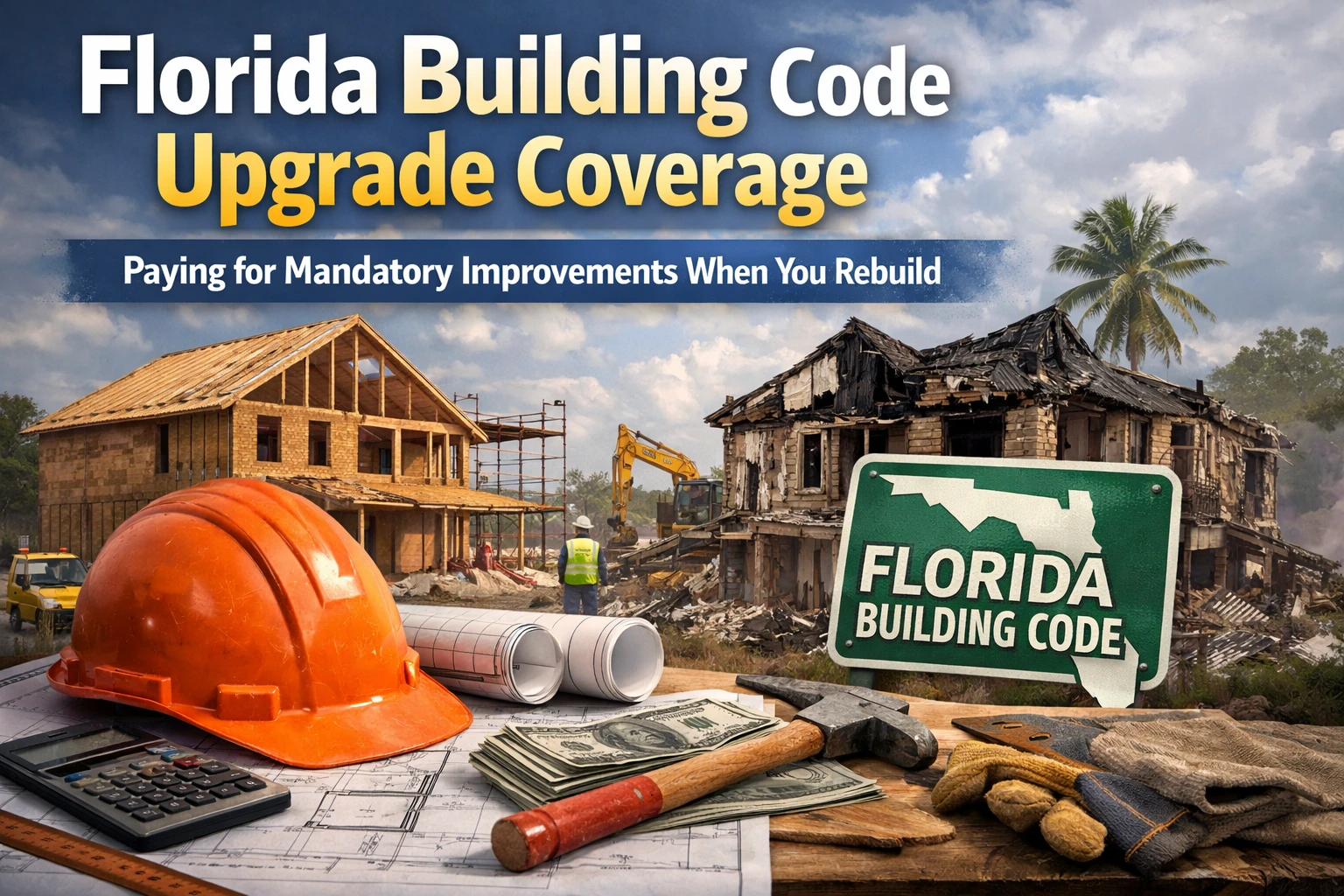
Table of Contents
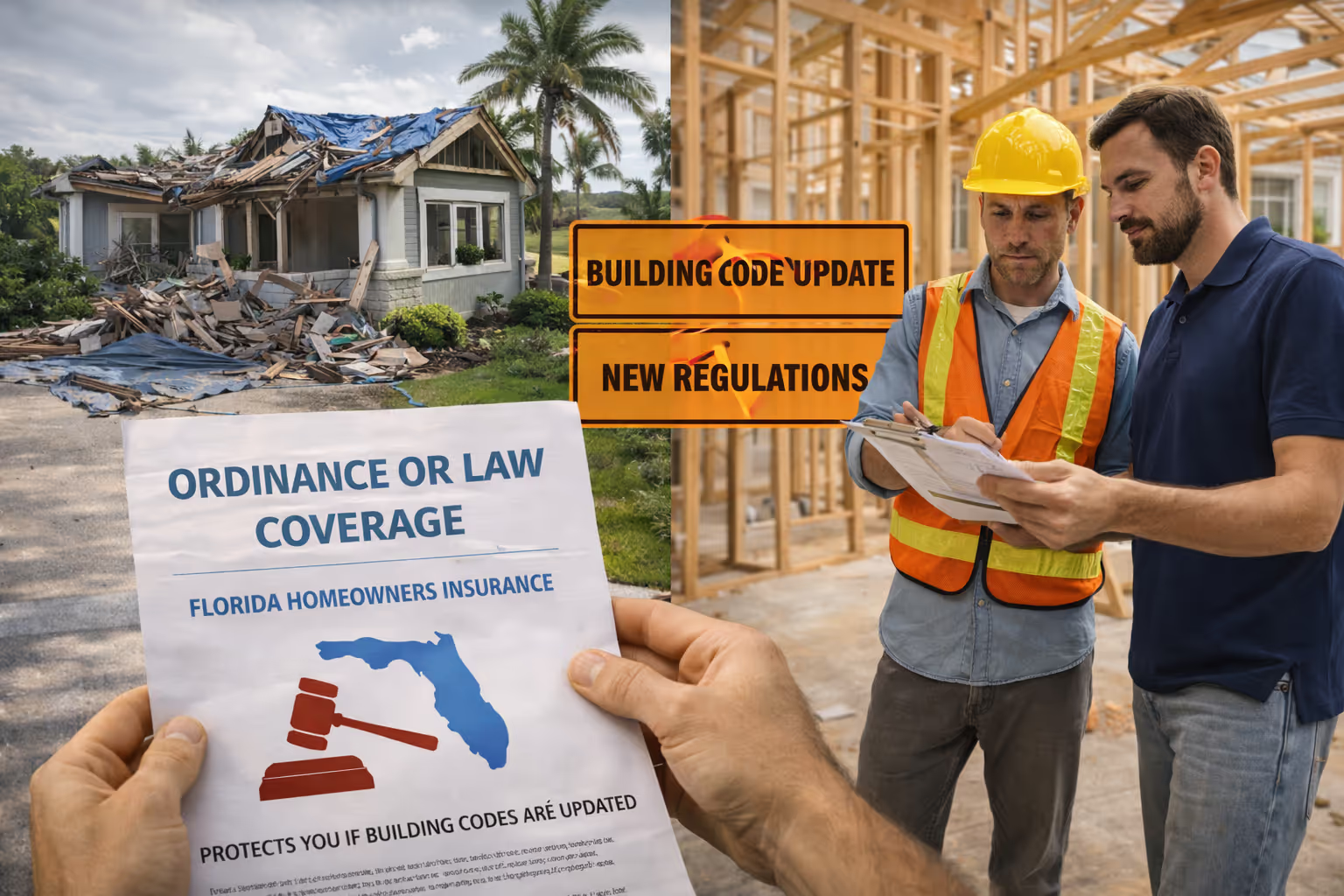
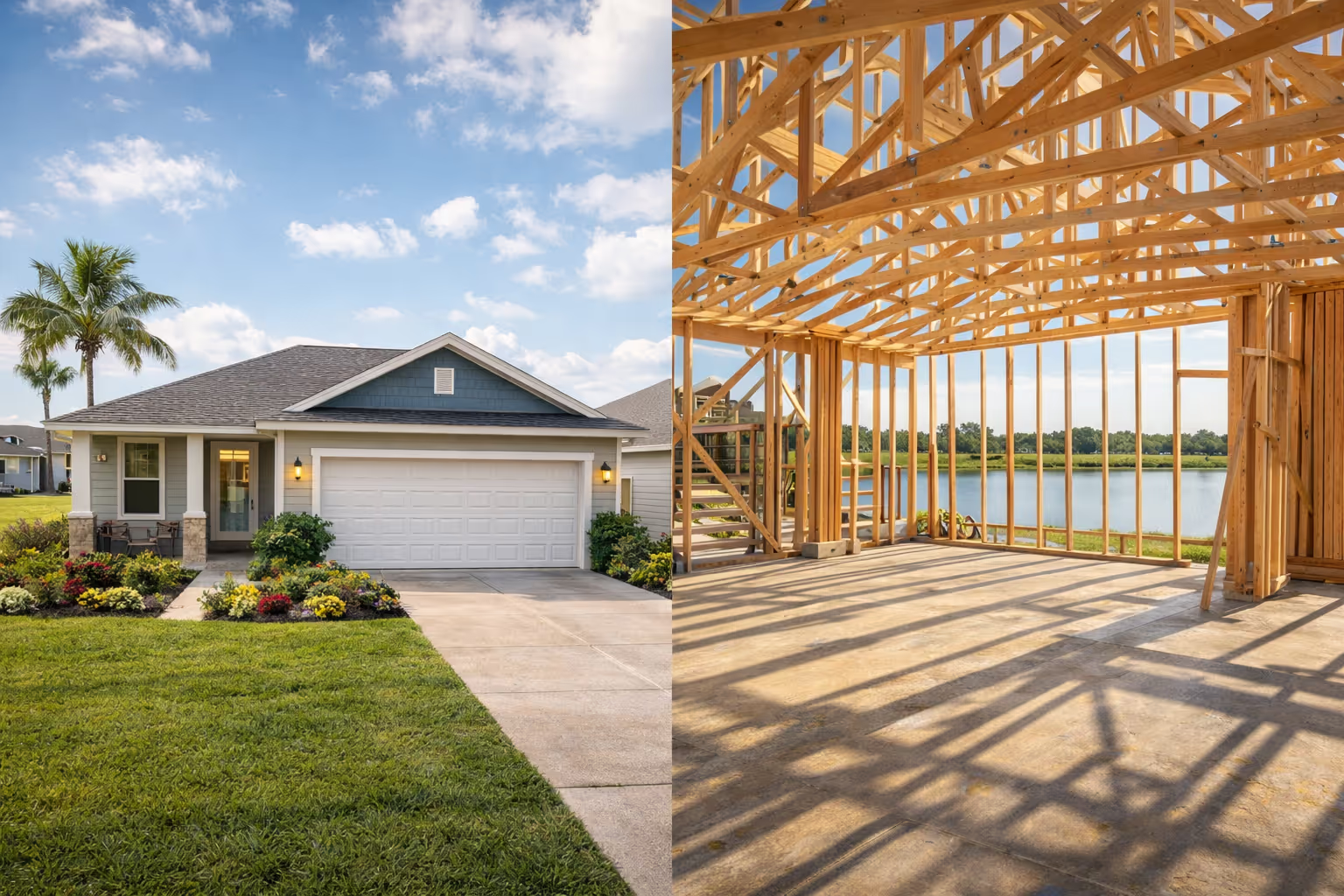
Florida building code upgrade coverage pays the additional costs of meeting current building codes when repairing or rebuilding your home after a covered loss. When a hurricane damages your 1985-built home, you can't simply rebuild to 1985 standards. Current Florida Building Code requirements for hurricane resistance, energy efficiency, electrical systems, and other elements must be met.
These mandatory upgrades can add tens of thousands of dollars to reconstruction costs that standard dwelling coverage doesn't address. Building code upgrade coverage fills this gap.
Florida's building codes have evolved dramatically since Hurricane Andrew devastated South Florida in 1992. Homes built before code improvements lack features now required in all new construction: reinforced roof connections, impact-resistant openings, updated electrical panels, modern plumbing standards, and more. When older homes suffer major damage, the gap between original construction and current requirements creates substantial additional expense. Without building code upgrade coverage, homeowners must pay these mandatory improvements out of pocket even when they have adequate dwelling coverage for rebuilding to original specifications.
Why Building Code Coverage Matters in Florida
Florida's unique regulatory environment and construction history make building code upgrade coverage particularly important for homeowners in the state. Several factors combine to create significant potential exposure.
Dramatic code evolution since 1992 means most Florida homes were built under substantially different standards than currently required. The Florida Building Code, implemented statewide in 2002 and strengthened repeatedly since, requires construction features that older homes simply don't have. Any major rebuilding triggers these requirements.
Hurricane-resistant construction mandates represent the largest code-related cost increase. Current codes require specific roof deck attachment methods, roof-to-wall connections, opening protection through impact windows or shutters, and structural elements designed to resist high winds. Retrofitting these features when rebuilding older homes adds substantial expense.
The 50% rule in many Florida jurisdictions requires that buildings damaged beyond 50% of their value must be brought into full current code compliance. Even if you're only replacing a damaged roof, crossing this threshold means upgrading electrical, plumbing, accessibility features, and other systems to current standards. This rule dramatically increases potential code upgrade costs.
Flood zone requirements have expanded and intensified over time. Homes in current flood zones may need elevation, flood venting, or other features not required when originally built. These requirements can add $50,000 to $100,000 or more when rebuilding in flood-prone areas.
Energy code requirements for insulation, windows, HVAC efficiency, and other elements have increased substantially. While not as dramatic as hurricane requirements, energy code compliance adds costs when rebuilding older homes constructed before these standards existed.
What Building Code Coverage Includes
Building code upgrade coverage, sometimes called ordinance or law coverage, typically addresses three distinct cost categories. Understanding each component helps you evaluate whether your coverage is adequate.
Coverage A addresses the loss in value of the undamaged portion of your home when demolition is required. If your home is 60% damaged and the 50% rule requires complete demolition to rebuild to code, the undamaged 40% represents a loss. Standard dwelling coverage only pays for damaged portions. Coverage A pays for the undamaged portion that must be demolished due to code requirements.
Coverage B pays for the actual cost of demolishing the undamaged portion and clearing the site. Tearing down remaining structure, removing debris, and preparing for new construction involves significant expense. This coverage addresses demolition costs beyond what standard coverage provides for damaged portions.
Coverage C, often the largest component, pays the increased cost of construction to meet current building codes. When your new roof must include hurricane straps and clips not required when your home was built, Coverage C pays the difference. When current electrical code requires panel upgrades beyond your original installation, Coverage C covers it.
Combined versus separate limits vary by policy structure. Some policies provide a single limit covering all three components. Others provide separate sub-limits for each coverage type. Understanding your policy's structure helps you evaluate whether limits are adequate for your potential exposure.
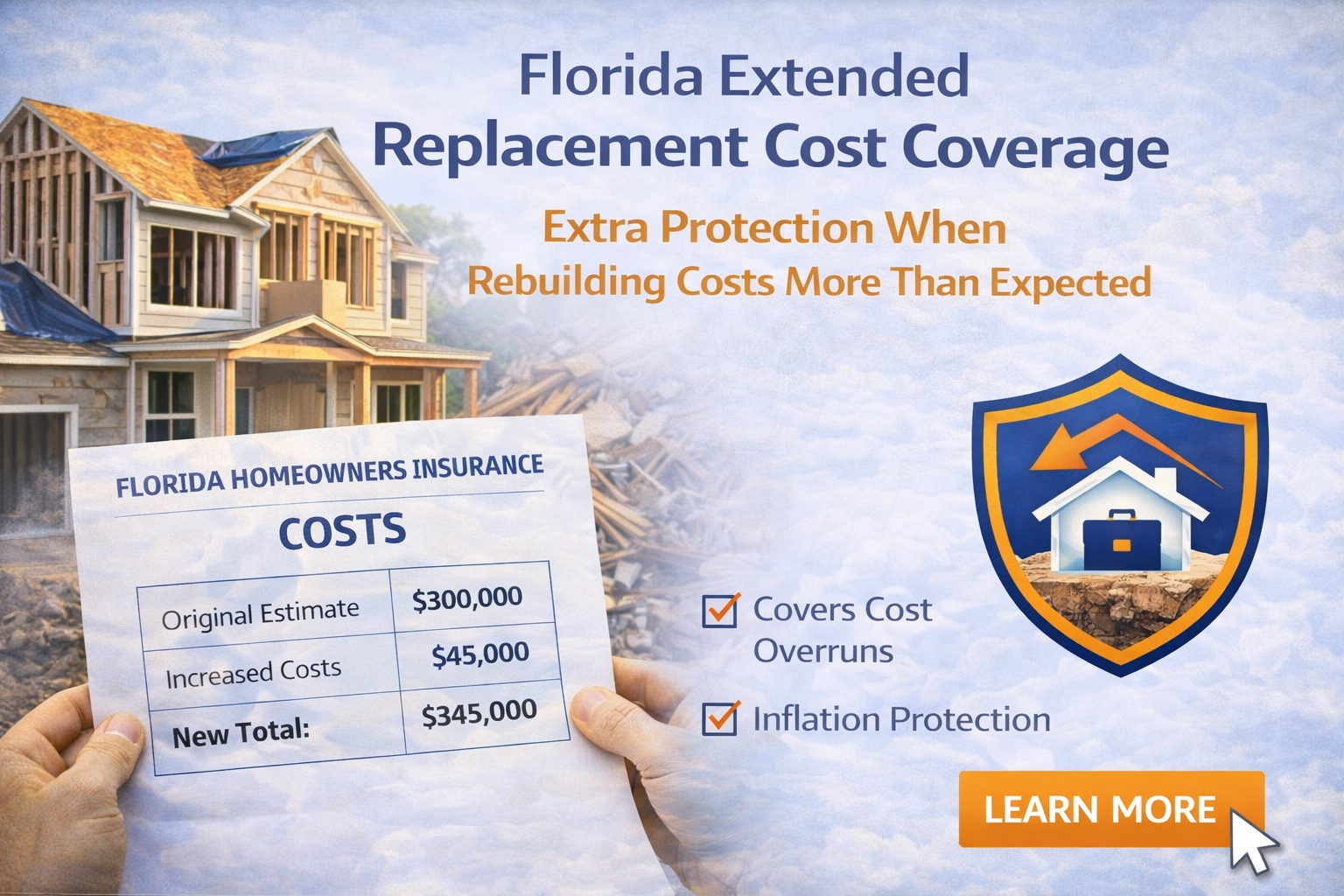
Percentage-based limits are common. Building code coverage is often expressed as a percentage of your dwelling coverage, such as 10%, 25%, or higher. A $400,000 dwelling limit with 25% building code coverage provides $100,000 for code-related costs. Whether this suffices depends on your home's age and potential code gaps.
How Much Coverage Do You Need
Determining adequate building code coverage requires understanding your home's age, original construction standards, and the gap between those standards and current requirements. Several factors influence your potential exposure.
Home age indicates code gap severity. A home built in 2015 to then-current Florida Building Code likely needs minimal upgrades when rebuilt. A home built in 1975 faces potentially massive code gaps covering hurricane resistance, electrical systems, plumbing, accessibility, energy efficiency, and more.
Original construction quality matters alongside age. A 1990 home built to exceed then-current standards may need fewer upgrades than a 1990 home built to minimum standards. Custom homes often incorporated features that later became code requirements.
Location-specific requirements affect costs. Coastal locations may have additional hurricane protection requirements. Flood zones impose elevation and construction standards. High-velocity hurricane zones along the coast face the strictest requirements. Your specific location determines which codes apply.
50% rule exposure depends on your home's value relative to potential damage. If your $400,000 home could suffer $200,000 in hurricane damage, you may face 50% rule triggers requiring complete code compliance. Understanding this threshold helps you evaluate potential exposure.
Professional estimates provide the most accurate assessment. A contractor or code consultant familiar with Florida Building Code requirements can estimate what bringing your specific home to current code would cost. This estimate guides appropriate coverage selection.
General guidelines suggest older homes need higher coverage percentages. Homes built before 1992 might need 25% or more of dwelling coverage for building code upgrades. Homes built after 2002 under the Florida Building Code might need only 10% to 15%. These are rough guidelines; your situation may differ.
Standard Coverage Versus Enhanced Options
Building code coverage availability and limits vary significantly between insurers and policy types. Understanding your options helps you obtain appropriate protection.
Minimal or no coverage is unfortunately common in basic policies. Some Florida homeowners policies include little or no building code coverage, particularly policies from insurers focused on price competition. Check your policy carefully rather than assuming coverage exists.
Standard inclusion at modest limits characterizes many policies. A common provision includes 10% of dwelling coverage for building code costs. On a $400,000 dwelling limit, this provides $40,000, which may prove insufficient for older homes facing substantial code gaps.
Enhanced limits are available from some insurers either as standard features in premium policies or as optional endorsements. Coverage of 25%, 50%, or even 100% of dwelling coverage may be available. The additional premium for higher limits is typically modest compared to the protection gained.
Separate purchase options exist when your primary insurer offers inadequate building code coverage. Some specialty insurers offer standalone ordinance or law coverage that supplements your base homeowners policy. This option adds complexity but may provide necessary protection.
Citizens Property Insurance includes building code coverage but at limits that may not suffice for all situations. If you're insured through Citizens, review your specific coverage limits and consider whether they're adequate for your home's code gap exposure.
Comparison shopping for building code coverage matters. When evaluating Florida home insurance options, specifically compare building code coverage limits. An insurer with a slightly higher base premium but substantially better code coverage may provide better overall value.
Filing Building Code Claims
When damage occurs and code upgrades become necessary, proper claims handling ensures you receive your coverage entitlement. Understanding the process helps you navigate it effectively.
Document original versus required construction from the outset. When assessing damage, note what your original construction included and what current code requires. This documentation supports claims for the difference.
Separate contractors' bids showing code upgrade costs helps distinguish between rebuilding to original specifications and meeting current requirements. Request itemized bids breaking out code-required upgrades from basic reconstruction.
Building department documentation of required improvements provides official verification. Permit applications, plan review comments, and inspection requirements all document what codes mandate for your rebuilding project.
Timing of code coverage claims typically follows dwelling coverage claims. Your primary dwelling coverage addresses structural damage. Building code coverage addresses the incremental cost of code compliance. These may process simultaneously or sequentially depending on your insurer.
Multiple code requirements may apply. Hurricane resistance codes, electrical codes, plumbing codes, accessibility requirements, energy codes, and flood regulations may all impose different requirements. Document compliance needs across all applicable code categories.
Coverage disputes can arise around what's truly code-required versus what represents upgrades or improvements. Maintain clear documentation showing that claimed expenses are mandatory for legal compliance, not optional improvements you've chosen to make.
Common Code Upgrade Requirements in Florida
Understanding specific code requirements helps you evaluate your potential exposure. Several categories of requirements commonly affect older Florida homes when rebuilding.
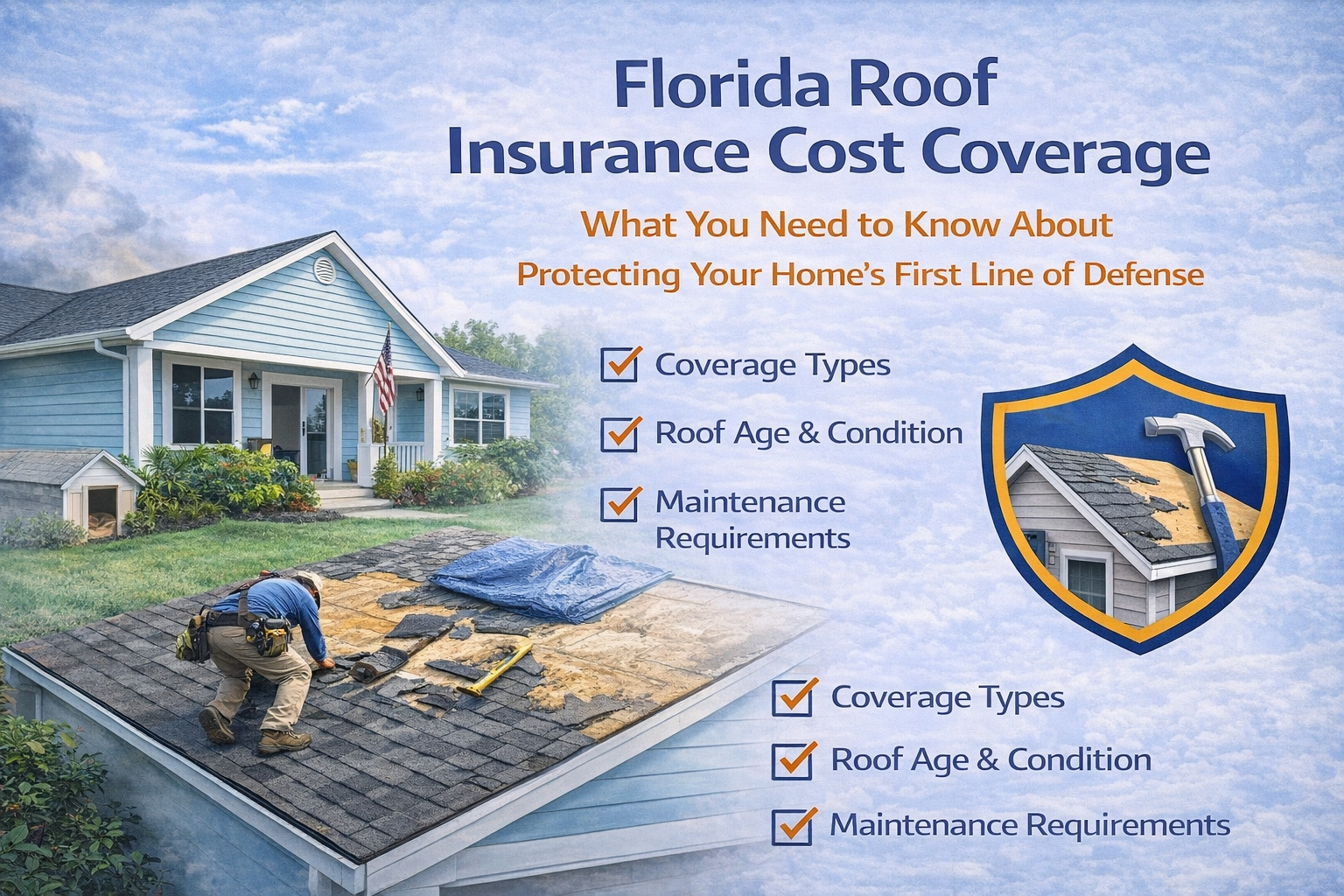
Roof system upgrades represent the most significant hurricane-related code requirement. Current code requires specific nail patterns for roof deck attachment, hurricane straps or clips connecting roof trusses to walls, and approved roofing materials meeting wind resistance standards. Older roofs often used fewer, smaller fasteners and lacked structural connections now required.
Opening protection through impact-rated windows and doors or approved hurricane shutters is required in portions of Florida's high-velocity hurricane zone. Even outside these strictest areas, opening protection substantially improves building code compliance scoring and may be required for certain coverage types.
Electrical panel upgrades to modern standards including proper amperage, GFCI and AFCI protection, and current wiring methods are commonly required when substantial rebuilding occurs. Homes with original electrical from the 1970s or earlier often face significant upgrade requirements.
Plumbing system improvements replacing outdated materials like polybutylene or galvanized pipes with current-approved materials may be required when rebuilding involves plumbing systems.
Flood elevation requirements for homes in flood zones may mandate raising the structure above base flood elevation. This expensive requirement can add $50,000 to $150,000 or more for substantial reconstruction in flood-prone areas.
Energy code compliance including insulation values, window efficiency ratings, and HVAC efficiency standards adds costs when rebuilding older homes constructed before these requirements existed.
Accessibility requirements under ADA and Florida accessibility codes may apply depending on the scope of reconstruction and property characteristics.
Frequently Asked Questions
What is building code upgrade coverage? Building code upgrade coverage pays additional costs required to meet current building codes when repairing or rebuilding your home after a covered loss. Current codes often exceed standards that applied when older homes were built, creating upgrade costs standard dwelling coverage doesn't address.
Why is building code coverage important in Florida? Florida's building codes have evolved dramatically since Hurricane Andrew in 1992. Homes built before code improvements lack hurricane-resistant features, updated electrical systems, and other elements now required. Major rebuilding triggers these requirements, adding substantial costs beyond standard reconstruction.
How much building code coverage do I need? Coverage needs depend on your home's age and original construction standards. Homes built before 1992 might need 25% or more of dwelling coverage for code upgrades. Newer homes built under the Florida Building Code might need only 10% to 15%. Professional estimates for your specific home provide the most accurate guidance.
What does the 50% rule mean for building code coverage? Many Florida jurisdictions require that buildings damaged beyond 50% of their value must meet full current code compliance when rebuilt. Crossing this threshold triggers requirements across all code categories, potentially including electrical, plumbing, accessibility, and energy codes beyond just hurricane resistance features.
Is building code coverage included in standard Florida homeowners policies? Coverage varies significantly. Some policies include modest building code coverage, often 10% of dwelling coverage. Others include minimal or no coverage. Premium policies and endorsements may provide 25% to 50% or higher. Check your specific policy and consider increasing coverage if limits seem inadequate.
What types of code upgrades are most expensive in Florida? Hurricane-resistant construction features including roof connections, opening protection, and structural reinforcement typically represent the largest code upgrade costs. Flood zone elevation requirements can exceed $100,000 for homes requiring substantial lifting. Electrical system upgrades, while less expensive individually, add significant costs for older homes.
If you’re a homeowner in Florida, having the right insurance coverage is essential to protect your investment from hurricanes, floods, and other unexpected events. Learn more about the different coverage options, policy requirements, and ways to save by visiting our detailed guide to Florida homeowners insurance.

Get a
Florida Home Insurance
Quote










To see how Worth can reduce your risk.
Get a Free Quote


