Florida Swimming Pool Liability Insurance: Protecting Yourself From Pool-Related Claims
Table of Contents
Florida swimming pool liability insurance protects homeowners when someone is injured in or around their pool. Florida has more residential swimming pools than any other state, with approximately 1.7 million pools according to the Pool & Hot Tub Alliance.
This prevalence means Florida insurers are acutely aware of pool-related risks, and they price policies and set requirements accordingly. A standard homeowners policy includes liability coverage that extends to pool accidents, but whether your current limits adequately protect your assets is another question entirely.
Pool accidents generate some of the largest liability claims homeowners face. Drownings, diving injuries, slip and fall accidents, and drain entrapment incidents can result in catastrophic injuries or death, leading to lawsuits with potential judgments in the hundreds of thousands or even millions of dollars. Your homeowners liability coverage represents the first line of defense against these claims, making adequate limits essential for any Florida pool owner.
How Pools Affect Your Homeowners Insurance
Adding a pool to your property changes your insurance situation in several ways. Insurers view pools as attractive nuisances that increase liability exposure, and they adjust coverage terms and pricing accordingly.
Most Florida insurers require notification when you install a pool. Failing to disclose a pool can result in claim denials if pool-related incidents occur. The insurer may discover the undisclosed pool through aerial imagery, claims investigation, or policy renewal inspections, potentially leading to policy cancellation for misrepresentation.
Premiums typically increase when you add a pool, reflecting the additional liability risk. The increase varies by insurer and pool type but commonly ranges from $50 to $300 annually. Above-ground pools generally cost less to insure than in-ground pools since they're considered somewhat less risky.
Some insurers require specific safety features before they'll cover homes with pools. Fencing, self-latching gates, pool alarms, and safety covers may be mandatory. Insurers may inspect pool areas or require photographs documenting safety compliance before issuing or renewing coverage.
Diving boards and slides increase risk and premium further. Some insurers refuse coverage entirely for pools with diving boards due to the severe injury potential. Others require removal of diving boards as a condition of coverage. If you're buying a home with a pool that includes diving features, verify insurability before closing.
Hot tubs and spas carry their own risk considerations. These features involve drowning risk, slip hazards, and potential burns from improperly maintained water temperatures. Insurers generally treat hot tubs similarly to pools regarding liability concerns and safety requirements.
Understanding Pool Liability Coverage
Your homeowners liability coverage protects you when someone is injured at your pool and you're found legally responsible. Understanding how this coverage works helps you evaluate whether your protection is adequate.
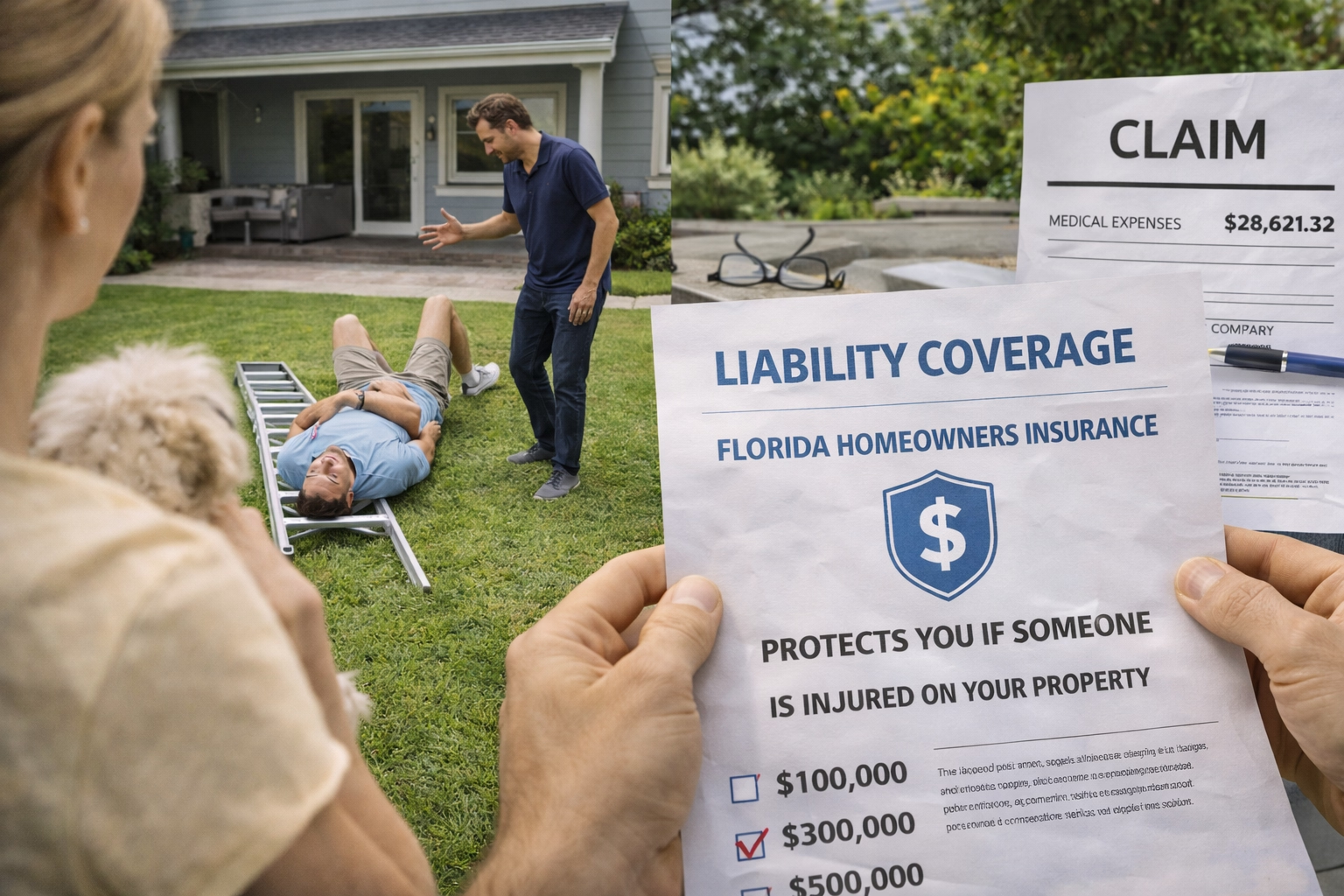
Liability coverage pays for bodily injury to others, including medical expenses, lost wages, pain and suffering, and other damages. If a guest slips on your wet pool deck and breaks their arm, liability coverage handles their medical bills and any additional damages they claim. If a child nearly drowns and suffers brain damage, liability coverage responds to what could be a massive claim.
Legal defense costs are covered in addition to your liability limits. If someone sues you over a pool accident, your insurer provides attorneys and pays defense costs even if the lawsuit is ultimately unsuccessful. These defense costs don't reduce your liability limits, providing important protection against frivolous or exaggerated claims.
Medical payments coverage, typically $1,000 to $5,000, pays minor injury costs regardless of fault. A guest who cuts their foot on the pool ladder can have that treated under medical payments without establishing you were negligent. This no-fault coverage handles small incidents without requiring liability claims.
Standard Florida homeowners policies include $100,000 in liability coverage, though many homeowners increase this to $300,000 or $500,000. Given pool-related injury potential, these higher limits are strongly recommended for pool owners. The premium difference for increased limits is typically modest, often $25 to $75 annually for substantially more protection.
When Liability Limits Aren't Enough
Severe pool injuries can generate claims far exceeding even $500,000 in liability coverage. Drowning deaths, permanent brain injuries from near-drownings, and spinal cord injuries from diving accidents can result in multi-million dollar judgments covering lifetime medical care, lost earning capacity, and pain and suffering.
Umbrella insurance provides additional liability protection beyond your homeowners and auto policy limits. Umbrella policies typically offer $1 million to $5 million in coverage for relatively affordable premiums, often $200 to $400 annually for the first million.
Consider this scenario: a neighbor's child suffers a serious injury at your pool, and a jury awards $1.5 million in damages. With $300,000 in homeowners liability and a $1 million umbrella policy, your insurance covers the judgment completely. Without the umbrella, you'd face $1.2 million in personal liability, potentially resulting in home loss, wage garnishment, and bankruptcy.
Umbrella policies require minimum underlying liability limits, typically $300,000 to $500,000 on your homeowners policy. You'll need to increase your base liability coverage before adding an umbrella if your current limits fall below the umbrella carrier's requirements.
Florida pool owners with significant assets should seriously consider umbrella coverage. The more you have to lose, the more important this additional protection becomes. High-income earners face particular exposure since future wages can be garnished to satisfy judgments exceeding insurance coverage.
Florida Pool Safety Requirements
Florida law and local building codes mandate specific pool safety features. Compliance with these requirements matters both for child safety and for insurance purposes. Failure to meet requirements can result in citations, increased liability if accidents occur, and potential coverage issues.
Pool barriers are required by Florida law for residential pools. Barriers must be at least 48 inches high, though many jurisdictions require 60 inches. Barriers must have no openings that allow a sphere over 4 inches to pass through and must not have climbable features like horizontal rails or chain link patterns.
Self-closing, self-latching gates are required on all pool barrier openings. Gates must open outward from the pool and latches must be located high enough that young children cannot reach them. Door alarms are required when house doors open directly to the pool area.
At least one additional approved safety feature beyond barrier requirements applies to most Florida residential pools. Options include pool alarms that detect water disturbance, safety covers meeting ASTM standards, door alarms on all home openings to the pool area, or self-closing doors with release mechanisms.
Drain covers meeting Virginia Graeme Baker Act requirements prevent entrapment injuries. These federal requirements mandate specific drain cover designs that prevent suction entrapment that can trap and drown swimmers. Pool owners must ensure their drains comply with these standards.
Insurance companies may inspect for compliance with safety requirements. Failure to maintain required safety features can result in claims denial if injuries occur. Document your safety features with photographs and maintain records of any inspections or certifications.
Pool-Related Exclusions and Limitations
Not all pool incidents fall under standard homeowners coverage. Understanding exclusions helps you identify gaps requiring additional coverage or risk management.
Business use exclusions apply if you operate swimming lessons, allow rental guests to use your pool, or otherwise use your pool commercially. Standard homeowners liability covers personal, not business, activities. If you rent your home on Airbnb or similar platforms, your standard policy likely excludes coverage for guest injuries. Landlord insurance or short-term rental coverage addresses this gap.
Intentional acts aren't covered regardless of circumstances. If you deliberately push someone into the pool and they're injured, liability coverage won't apply. This exclusion extends to injuries resulting from fights or intentional misconduct around the pool.
Some policies exclude coverage for certain pool features. Diving boards, slides, and rope swings face exclusions from some insurers. Water features like waterfalls or grottos may trigger additional exclusions. Review your policy for any pool-related exclusions before assuming full coverage exists.
Maintenance-related injuries may face coverage challenges. If your pool deck deteriorated dangerously and you failed to repair it, injuries from that hazard could be deemed maintenance failures excluded from coverage. Keeping your pool area in good repair supports both safety and insurability.
Reducing Pool Liability Risk
Beyond insurance coverage, practical risk management reduces the likelihood of injuries and resulting claims. These measures protect your guests and strengthen your position if claims arise despite your precautions.
Establish and communicate pool rules to all users. No running on the deck, no diving in shallow areas, children must be supervised by adults, no glass containers near the pool, and similar rules reduce common injury causes. Posting rules creates evidence you took reasonable precautions.
Supervise children constantly around your pool. Most childhood drownings occur during brief lapses in supervision. Even children who can swim face drowning risk. Designated adult supervision whenever children are present represents the single most effective safety measure.
Remove or secure ladders on above-ground pools when not in use. Above-ground pools rely on ladder removal as a key barrier preventing unsupervised child access. Make ladder removal part of your standard routine after swimming.
Maintain proper water chemistry and clarity. Murky water hides swimmers in distress and obscures depth. Improperly balanced water can cause skin and eye irritation leading to claims. Regular testing and treatment keep water safe and clear.
Keep rescue equipment readily available. A reaching pole, ring buoy, and rope near the pool enable quick response to swimmers in trouble. Learn CPR and keep certifications current. Quick, competent response can prevent deaths and reduce injury severity.
Consider CPR training for family members and regular pool users. The minutes before emergency responders arrive are critical in drowning situations. Immediate CPR dramatically improves survival and outcome odds.
Frequently Asked Questions
Does homeowners insurance cover swimming pools?
Yes, standard homeowners insurance extends liability coverage to swimming pool accidents. However, you must disclose your pool to your insurer, and your standard liability limits may prove inadequate for serious injuries. Premium increases and safety requirements typically apply to homes with pools.
How much liability coverage should pool owners carry?
Pool owners should consider at least $300,000 to $500,000 in homeowners liability coverage plus a $1 million umbrella policy. Serious pool injuries can generate claims exceeding these amounts, but this coverage level provides substantial protection for most homeowners. Those with significant assets may want higher umbrella limits.
Will my insurance cover pool accidents if I don't have a fence?
Coverage may be denied or limited if you fail to maintain legally required safety features. Florida law mandates pool barriers meeting specific standards. Insurance policies generally require compliance with laws and building codes. Lacking required fencing exposes you to both liability and coverage problems.
Does insurance cover diving board injuries?
Many Florida insurers exclude diving boards entirely or require their removal as a condition of coverage. If your policy excludes diving board injuries, you'll have no coverage for claims arising from that feature. Verify your policy's stance on diving boards and consider removal if coverage is excluded.
Are hot tubs covered the same as swimming pools?
Hot tubs and spas carry similar liability considerations and typically receive similar insurance treatment. You should disclose hot tubs to your insurer just as you would pools. Safety concerns including drowning, slipping, and burns may require specific precautions. Review your policy for any spa-specific provisions or exclusions.
What if someone drowns in my pool?
Your liability coverage responds to wrongful death claims if you're found legally responsible. Florida wrongful death claims can seek medical expenses, funeral costs, lost financial support, and survivors' mental anguish. These claims frequently exceed standard liability limits, making umbrella coverage crucial for pool owners.
If you’re a homeowner in Florida, having the right insurance coverage is essential to protect your investment from hurricanes, floods, and other unexpected events. Learn more about the different coverage options, policy requirements, and ways to save by visiting our detailed guide to Florida homeowners insurance.

Get a
Florida Home Insurance
Quote
















To see how Worth can reduce your risk.
Get a Free Quote


